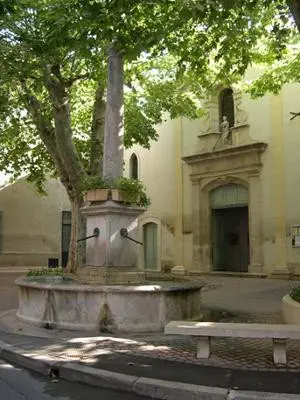




The church, the first part of which dates back to the 11th century, with successive additions up to the 17th century, is listed as a historic monument, as is the Chapelle des Pénitents built in 1844, at the eastern end of the square and separated from the church by the sacristy, the presbytery and a private house. It is an artistic and homogeneous ensemble, with preserved furnishings: choir woodwork, stalls, pulpit, rostrum with balustrade, communion rail and 19th-century paintings. The church houses the Altarpieces of Saint-Eloy and the Marriage of the Virgin, a bronze-gilded Altar-tomb and a curious relic, "Lou San Sabatoun "*.
*Lou San Sabatoun": according to the oldest documents and traditions, how did the Holy Relic arrive in Provence? Although there is a great deal of obscurity on this point, there are two possible hypotheses:
- The first, based on very ancient local traditions, is that the precious relics listed above were present at several points in our southern region at the same time, and that most of them seem to have been transported from Palestine by our first apostles, i.e. in the first century of the Christian era.
- The second would delay their arrival in Provence until the time of the last Crusades.
Accessible for disabled