






The monument was designed by sculptor Henri Raybaud and architect Gaston Castel.
The statue is composed of two groups, described as follows in the explanatory memorandum for the "Monument à la mémoire des Victorieux Enfants de la Cité, morts pour la France":
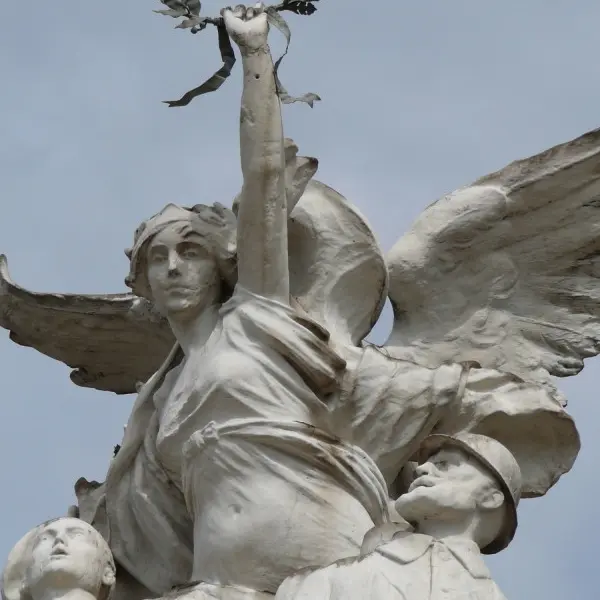
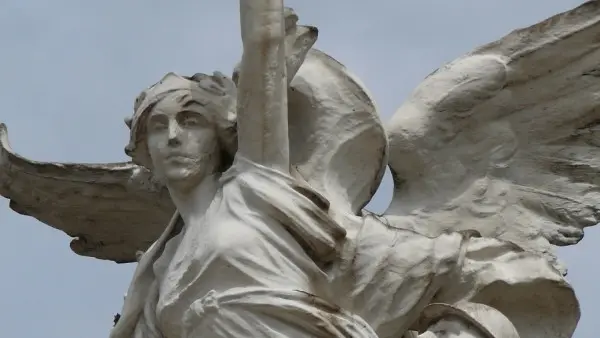
"The allegorical group in Carrara marble, depicting winged Victory flying over two soldiers, a young alpine hunter and an old poilu, stands on a fine white stone base. At their feet are warlike attributes such as a cannon wheel, a carriage and an old Boche helmet.
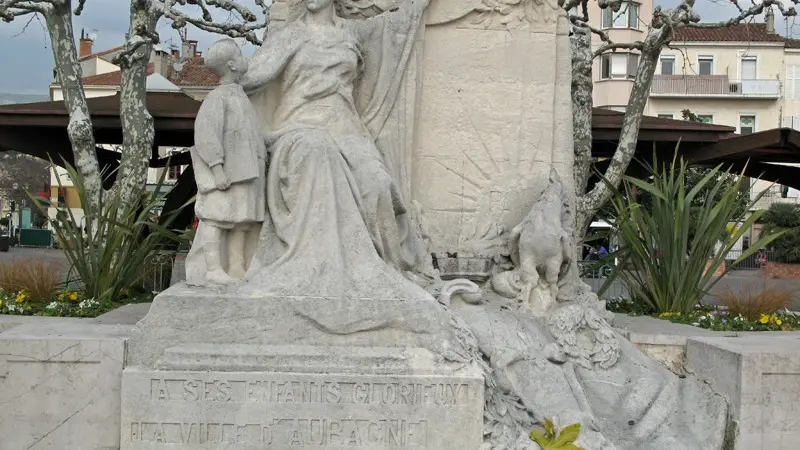
At the base of the monument, the town of Aubagne, symbolized by a noblewoman, shows a child the respect and admiration we should have for these soldiers, artisans of the Great Peace - and with a simple gesture, she extends an olive branch to her sons, valiant heroes of whom she is proud."
The statue is composed of two groups, described as follows in the explanatory memorandum for the "Monument à la mémoire des Victorieux Enfants de la Cité, morts pour la France":
"The allegorical group in Carrara marble, depicting winged Victory flying over two soldiers, a young alpine hunter and an old poilu, stands on a fine white stone base. At their feet are warlike attributes such as a cannon wheel, a carriage and an old Boche helmet.
At the base of the monument, the town of Aubagne, symbolized by a noblewoman, shows a child the respect and admiration we should have for these soldiers, artisans of the Great Peace - and with a simple gesture, she extends an olive branch to her sons, valiant heroes of whom she is proud."