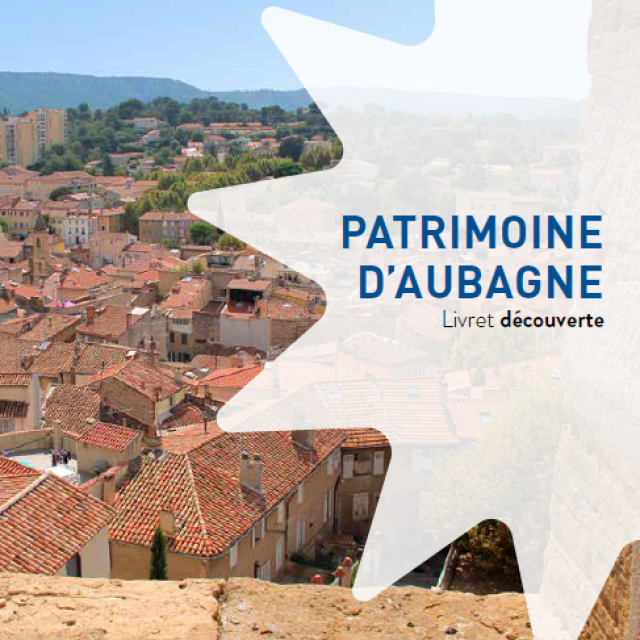
Starting from the house where Marcel Pagnol was born, a signposted walking route takes you through the streets of Aubagne’s historic centre, exploring the heritage and history of this thousand-year-old town.

Panorama Ville Eglise Tour De L'horloge Aubagne Oti Aubagne
|
Starting from the house where Marcel Pagnol was born, a signposted walking route takes you through the streets of Aubagne’s historic centre, exploring the heritage and history of this thousand-year-old town.
The Lion Fountain originally stood against a wall facing the Porte Gachiou. In 1682, it received a small statue of a lion, sculpted by Jean Galeoti. In 1864, it was moved to the present-day square, created by the demolition of a house. The town council had it fitted with a circular cold stone basin and two pipes to meet all the needs of the many carters living in the area.
Until 1920, this fountain received water from the Lignières spring, like the fifteen or so other pools scattered around the town, which supplied the population with drinking water that was ” very pure and very good, but which nevertheless had the disadvantage of depositing limestone fairly quickly in the pottery pipes, necessitating frequent repairs to the pipes “.
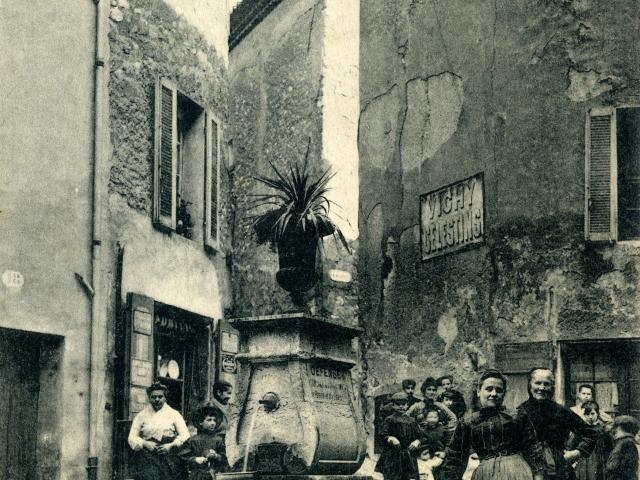
The lion disappeared from the fountain’s decoration, replaced by a cast-iron Medici vase, until 2003, when a joint initiative by Les Amis du Vieil Aubagne and the Garlaban and Vallée de l’Huveaune Lion’s Club led to the recovery of a small lion carved in Tavel stone.
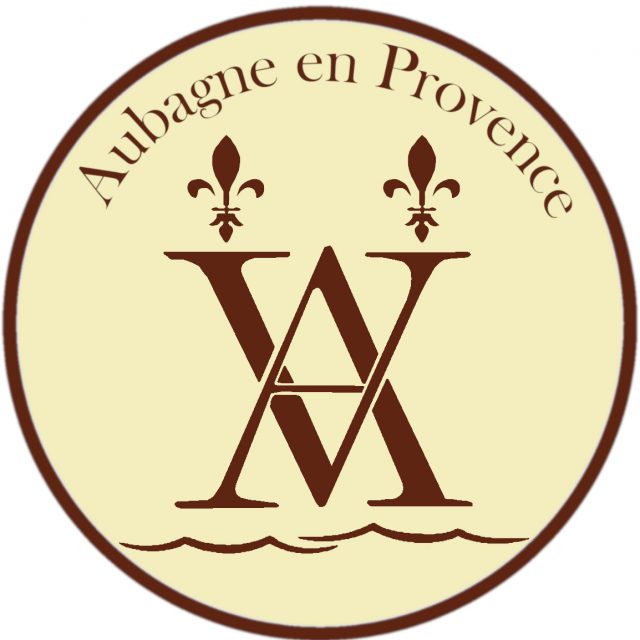
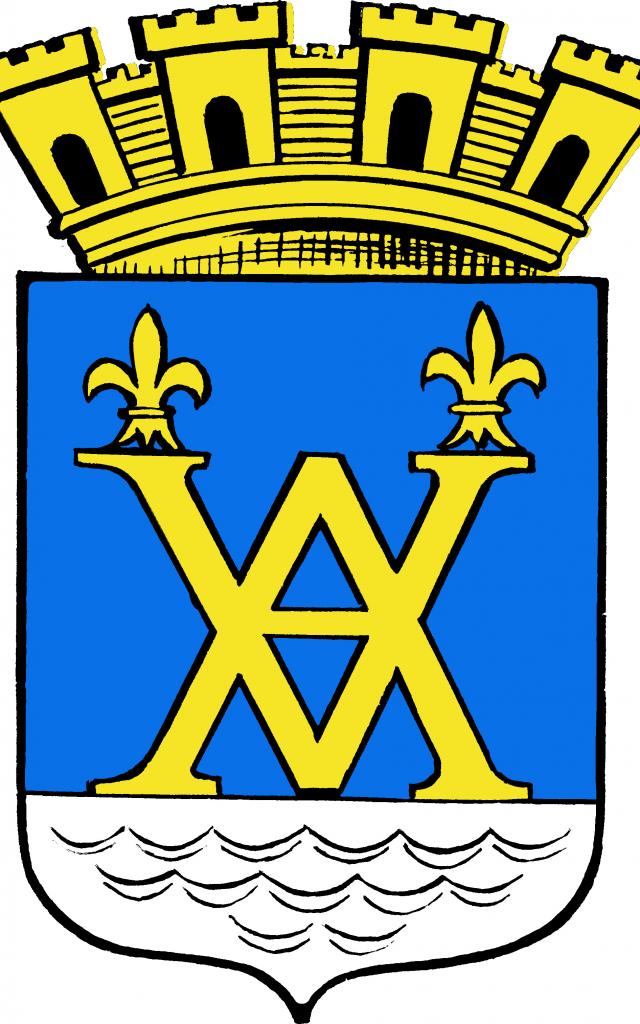
The lion holds in its claws the coat of arms of the town of Aubagne, the characteristics of which were established at the end of the 16th century:
Azure, the capital letters A and V interlaced Or, surmounted by two fleurs-de-lys Or and supported by a river Argent issuant from the base.
The A stands for Aubagne(Albanea) and the V for Huveaune(Vvelna). It bears two fleurs-de-lys, a mark of royal recognition for the city’s courage, a witness in spite of itself to a historical event recounted nearby in rue Laget at the Hôtel de Bausset…
The Bénaros family
At number 16 rue du Pont, a plaque honours the memory of the Jewish Bénaros family, who ran a haberdashery there. Father Messaoud, mother Fortunée and eldest daughter Zelda were arrested on 12 May 1944 by the Gestapo and deported to the Auschwitz camp on convoy no. 74 with 1,200 other people, including 191 children. Only Charlotte, the youngest daughter, escaped arrest and death; she was at school.