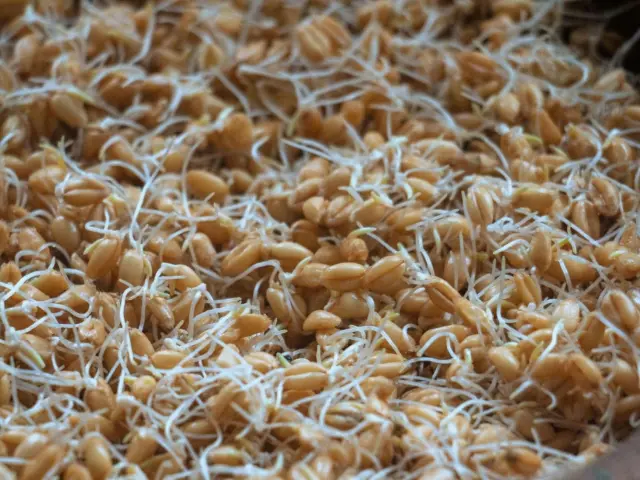
On Christmas Eve, after laying out three white tablecloths, your ” sietoun ” of wheat, Nerthe, holly and the rose of Jericho. The dishes for the big supper take their place on the table.
Most often made up of seven lean dishes, without meat, depending on the social class and habits of each family, the arrival of produce, the land and its production, the menus are different in the four corners of Provence.
In spite of everything, the best products are kept and the table is laid with snails, cod, mussels, cardoons, celery, vegetable gratin, carde, aïoli, omelette, brandade…
After the big supper, it’s time for midnight mass, often celebrated in Provençal.
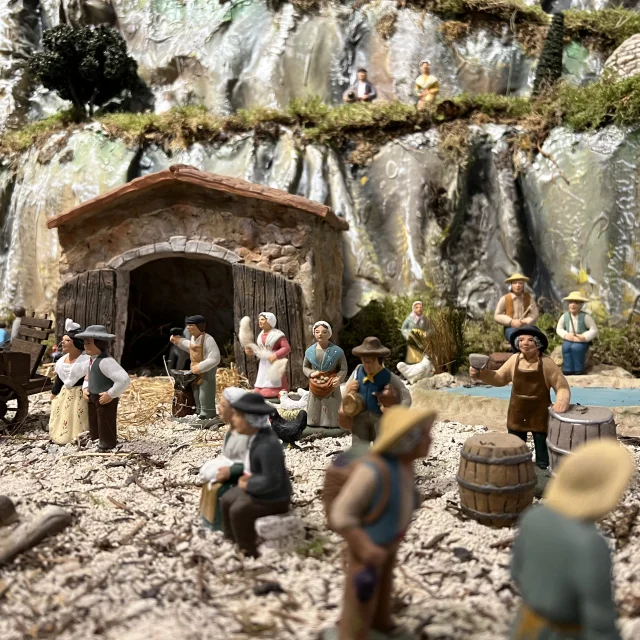
Mass is accompanied by a live nativity scene and Provençal carols, accompanied by flutes and tambourines.
This ceremony brings together church-goers and non-church-goers, as well as those who appreciate the traditional and folkloric aspects of the ceremony.
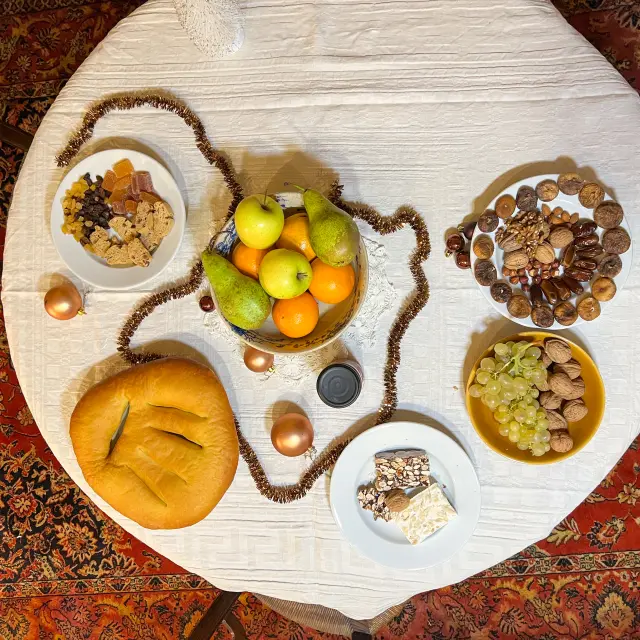
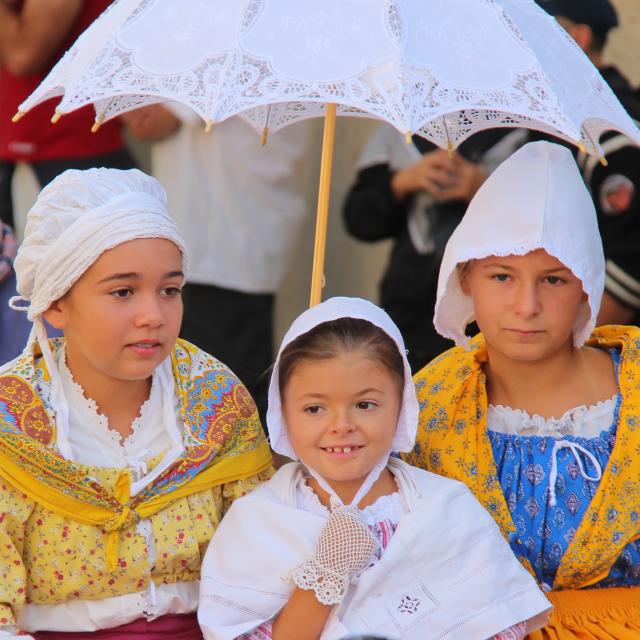
You’ll find the ritual of the Shepherding, where a procession of cherubs, little shepherds, young girls and drummers escort a lamb brought “as an offering” by the shepherds, which is not sacrificed but receives a blessing. At the end of mass, it’s time to lay the baby Jesus in the cot, and above all to enjoy the Thirteen Desserts, the only moment of abundance during the Advent festivities.
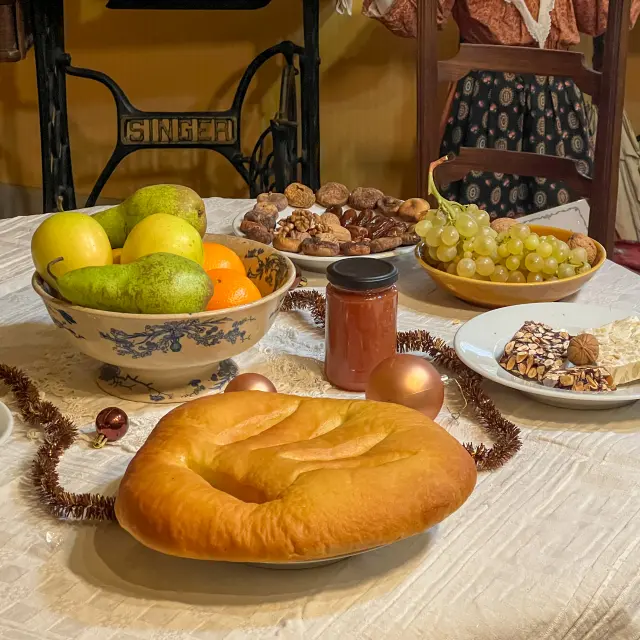
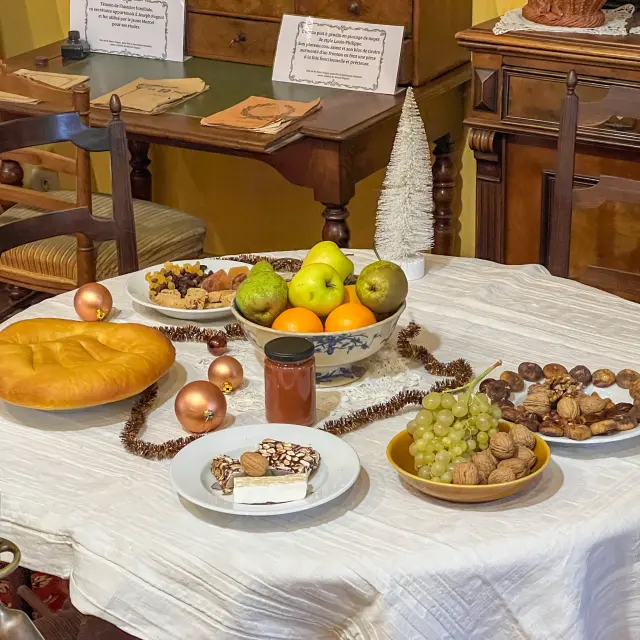
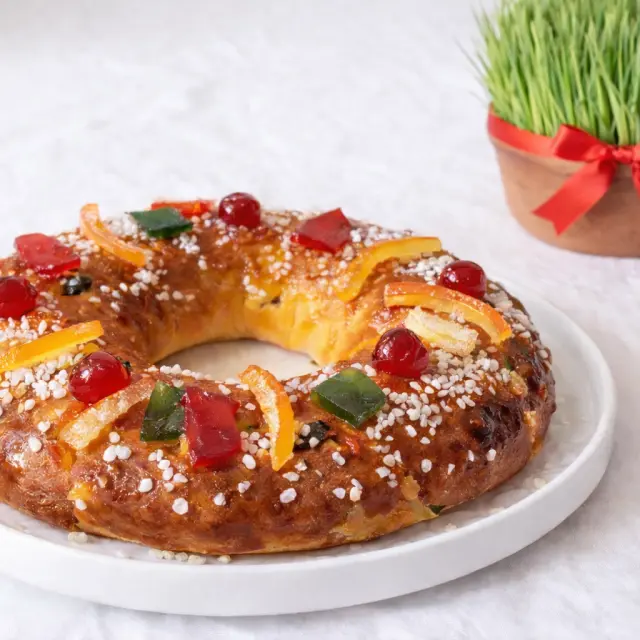
The thirteen desserts are a bone of contention among the people of Provence, because the list of thirteen desserts changes and evolves according to the region, even if some are unavoidable.
For example, the people of Aix prefer Calissons to Navettes des Marseillais, while others choose gibassier rather than pompe à l’huile, or fougasse with orange blossom in the region of Nice.
There are more than fifty different desserts throughout Provence, but some are essential:
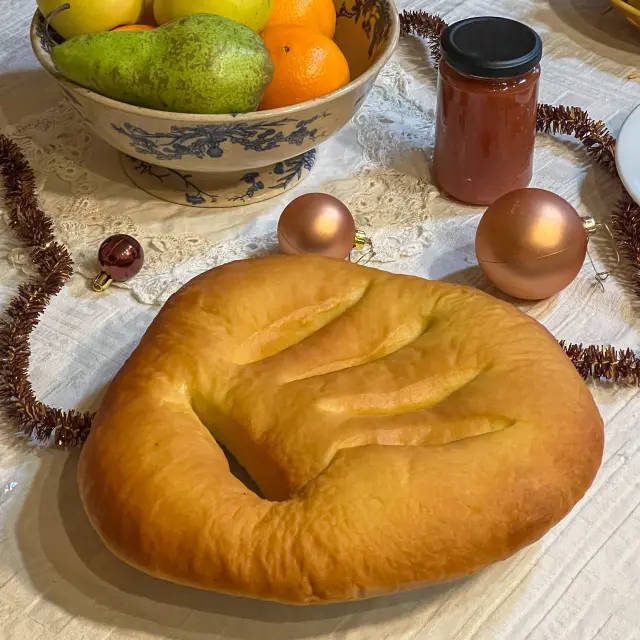
– La pompe à huile broken with the hands and eaten with cooked wine,
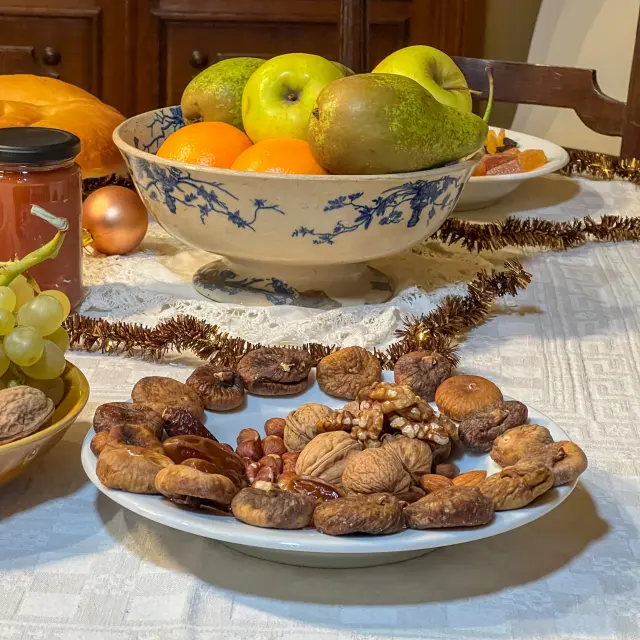
– the four mendiants: dried figs, sultanas, almonds and hazelnuts,
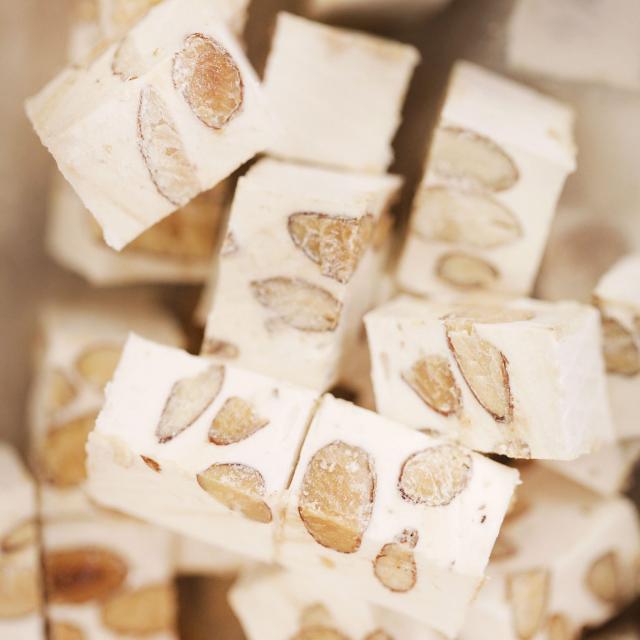
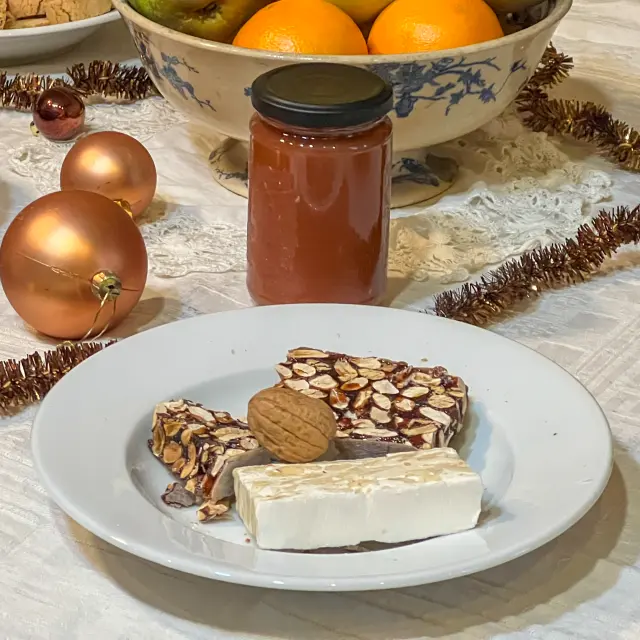
– black and white nougats,
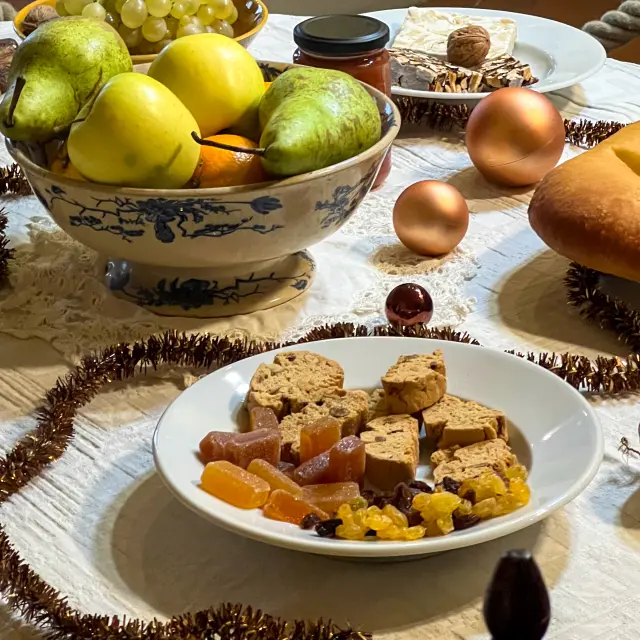
– dates and fruits such as apples, pears, melons and fresh grapes.
To these we can add calissons, navettes, quince or fruit paste, mandarin oranges.
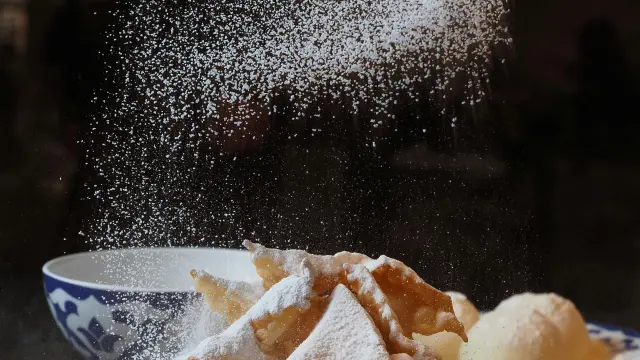
Personally, I can’t think of a list of thirteen desserts without a few bugnes and oreillettes made by my mother!