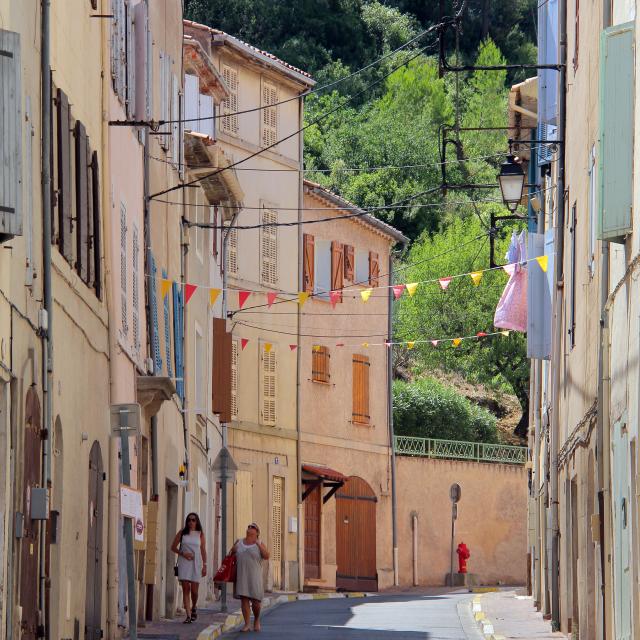
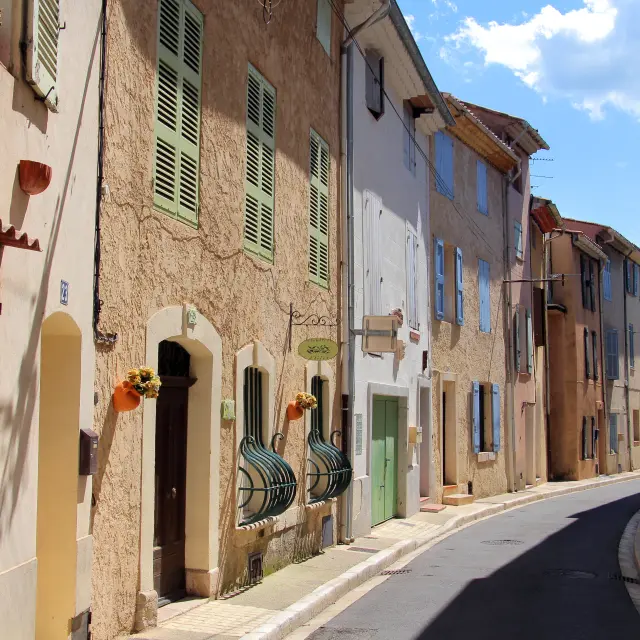
The village boasts a number of monuments that were built and then destroyed over the course of history. These include
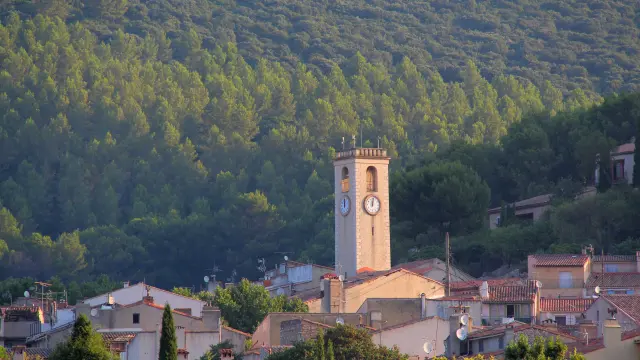
The Clock Tower
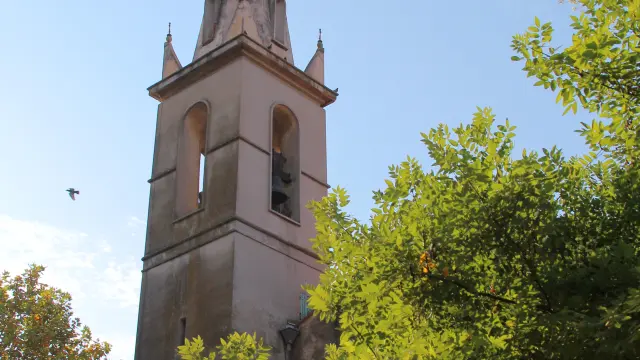
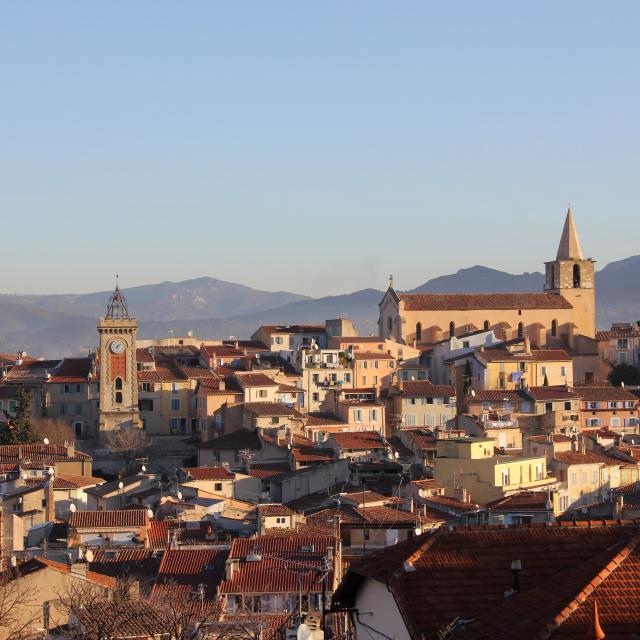
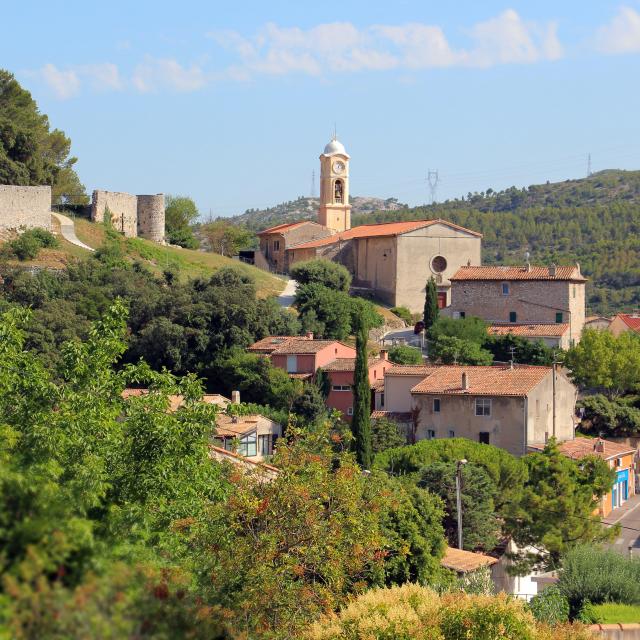
Built in 1824, it was erected above the town hall because the population wanted to know the official time. It replaced the 17th-century clock, which was destroyed in 1811 because it threatened homes and could only strike 19 times!
Fountains and oratories
The Moussue fountain can be found in the Place de la Libération. The first fountain leaked and in winter caused icy patches all down the street. The current fountain dates from the 1830s. On closer inspection, you can see the lions’ heads.
The Château des Glandevès
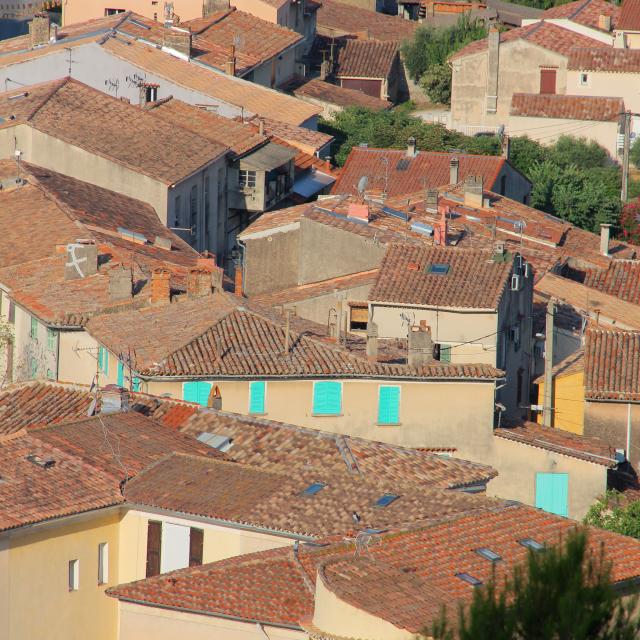
Now privately owned: when it was decided in 1509 to move the village, the castle also had to be moved. The current castle belonged to the Lords of Cuges: the Glandevès family. 11 March 1509: the inhabitants were authorised by Lord Antoine de Glandevès to settle near his fertile land, around the new castle. All the materials from the old settlement were then recovered. In the 16th century, the heart of the village was rebuilt around the château de Glandevès, a situation that has remained unchanged to this day, although the village has expanded further out onto the plain.
The church
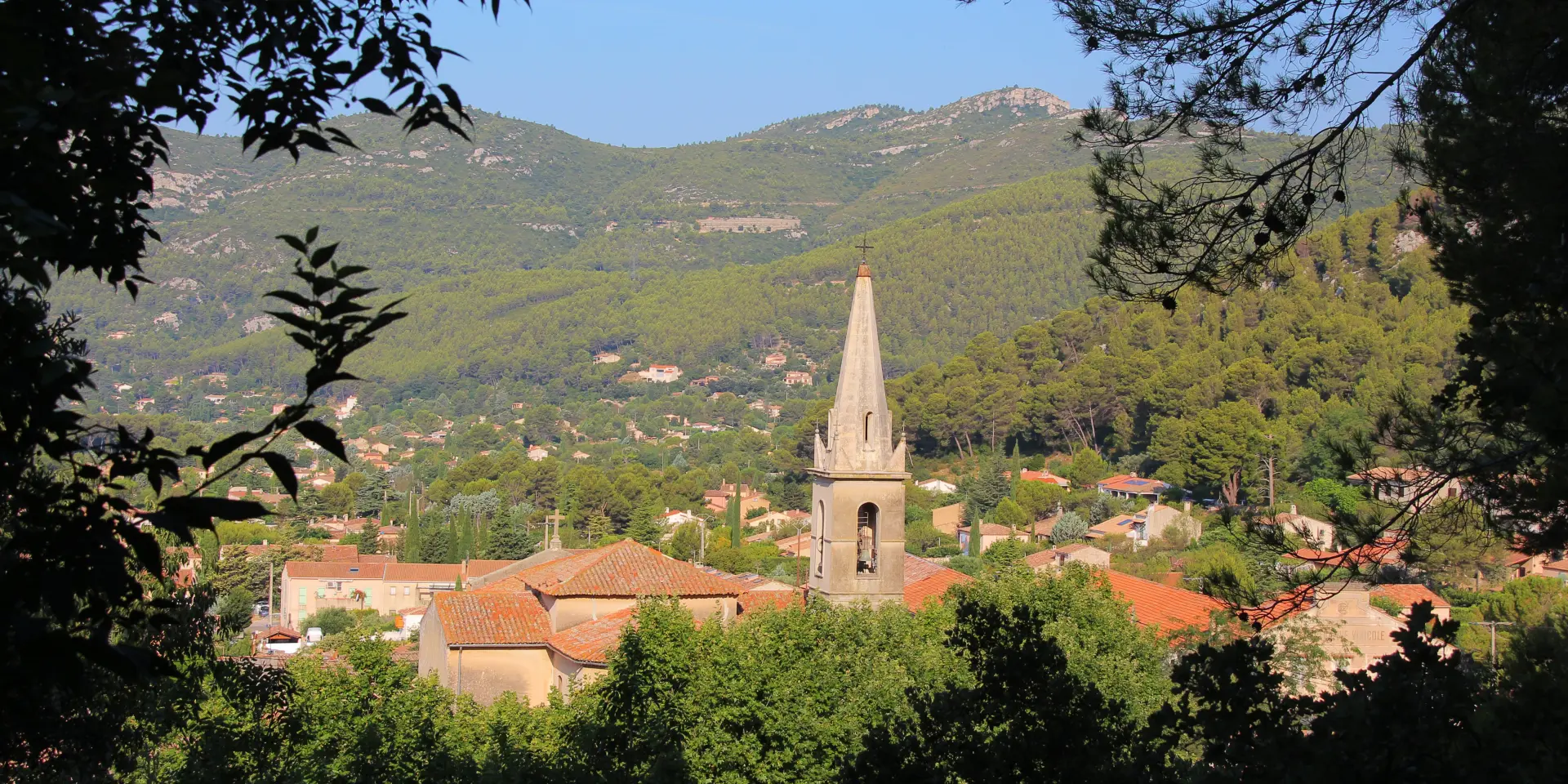
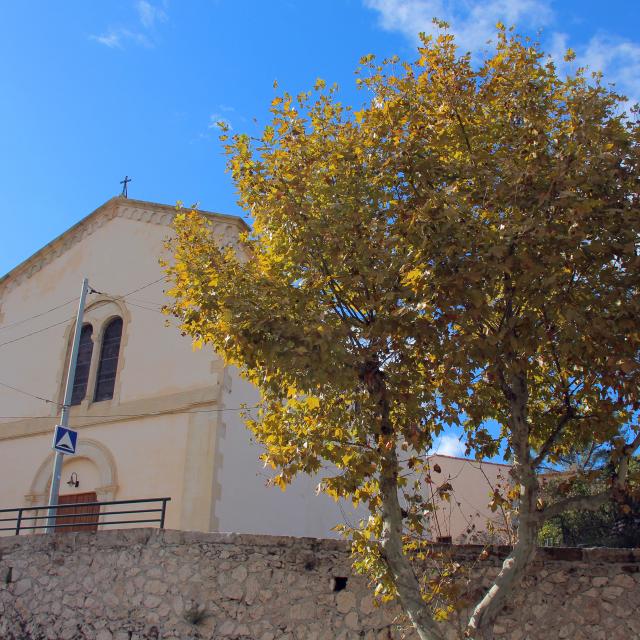
The first church in Cuges-Les-Pins was built in 1509. In 1615, a chapel was built to the right of it, which was to become the Glandevès family vault. Deemed impractical and unsightly, the first church was demolished and rebuilt in 1869. Inside the church, a fragment of Saint Anthony’s relic has been carefully preserved.
The crushing area
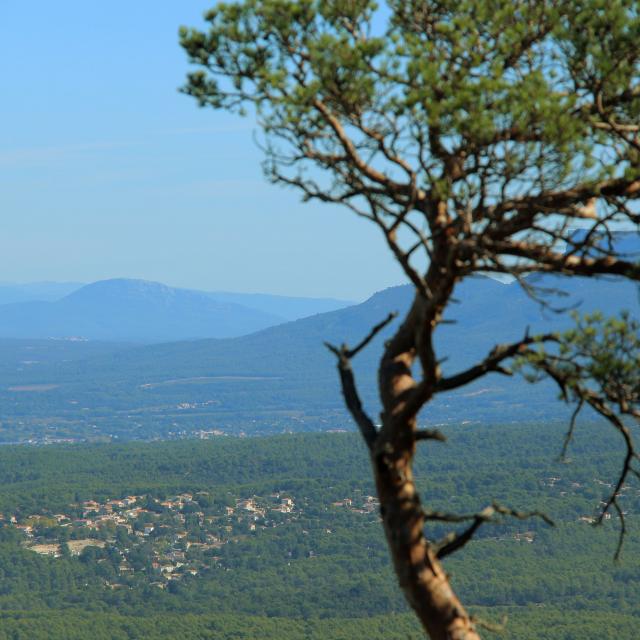
This is a restored area with an exceptional view in a place steeped in history.
This stone-paved area, exposed to full sunlight and constantly subject to gentle draughts, was used to thresh the grain to separate it from the cob.
The Saint Antoine chapel
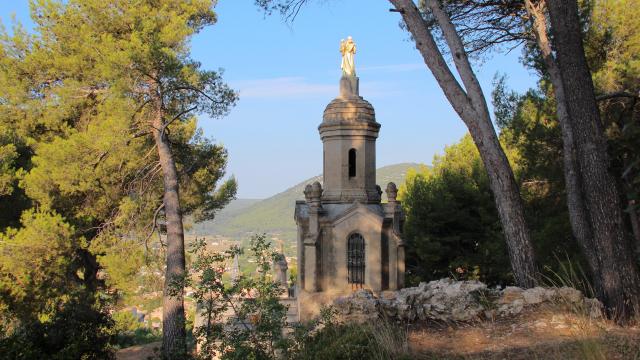
Overlooking the village, this chapel was built in 1896 on the site of the former château chapel by the famous Marseille architect Monnier.
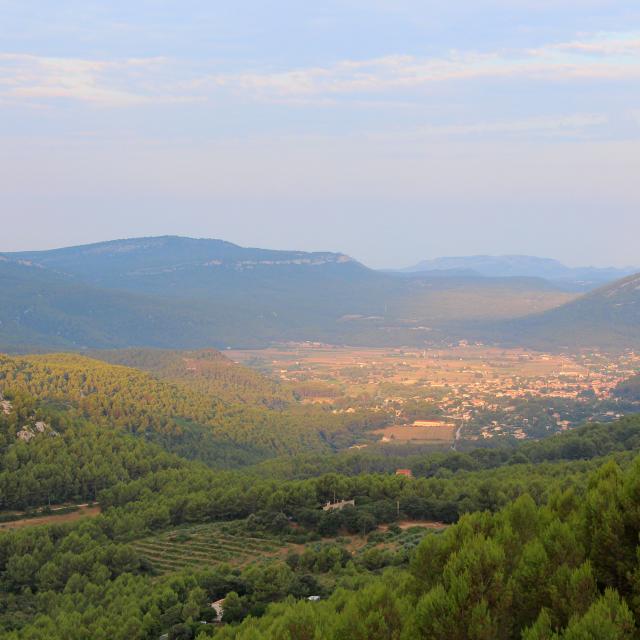
The climb up to the chapel and the view over the plain allow you toadmire its vastness. The chapel bears the name of its patron saint, and every 13 June for the past seven centuries, the traditional pilgrimage of Saint Anthony of Padua has continued.