Camerone, the memorable battle of the Foreign Legion

30 April 1863

Every year on 30 April, Aubagne becomes the setting for a unique ceremony: Camerone. Much more than a military commemoration, this event embodies the soul and values of the Foreign Legion. Combining history, remembrance and tradition, Camerone is now a major event open to the public, attracting the curious and enthusiasts alike.

What is Camerone?

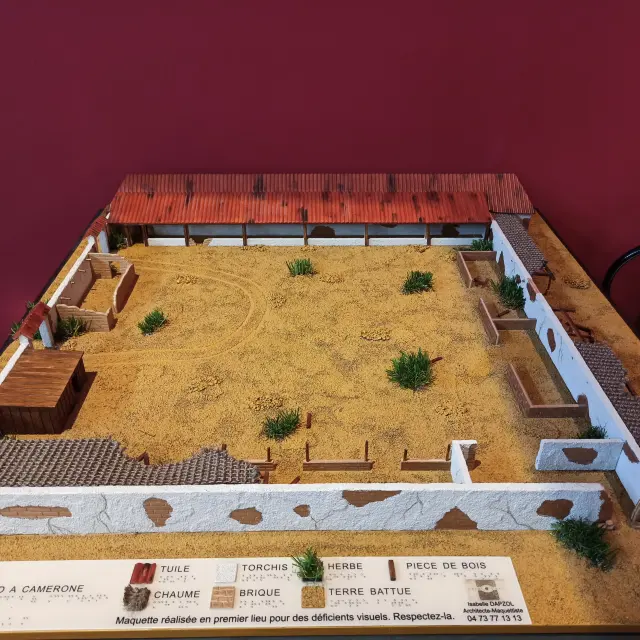
Camerone refers to a battle that took place on 30 April 1863 in Mexico, during the French expedition to Mexico (1861-1867), led by Napoleon III. On that day, the 3rd Company of the 1st Foreign Regiment was tasked with escorting a strategic convoy. The 63-strong company faced 2,000 Mexicans. The legionnaires found themselves surrounded and had to retreat to a hacienda.

Despite the heat, fatigue and unfavourable odds, the legionnaires held out for hours on end, until their ammunition and strength were exhausted. In the evening of this epic battle, the last six legionnaires bayoneted the Mexican troops. True to their word and to their mission, they fought to the bitter end.

This battle has become the founding myth of the Foreign Legion. More than a military victory, Camerone symbolises courage, loyalty to one’s word and the sacred cult of the mission. It is this exemplary resistance, more than the outcome of the battle, that makes Camerone such an important event. Even today, the name resonates as an essential moral reference in the military world: the expression “doing Camerone” has almost become a way of doing things.
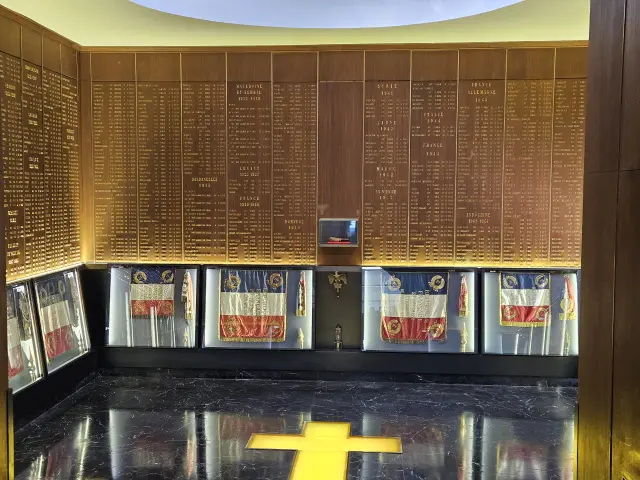
Inscription in memory of the Battle of Camerone

There were less than sixty of them here
Opposed to a whole army.
Its mass crushed them.
Life rather than courage
Abandoned these French soldiers
At Camerone on 30 April 1863.

Location: Franco-Mexican mausoleum, Veracruz, Mexico

The Camerone ceremony in Aubagne (30 April)

An important moment in the lives of legionnaires

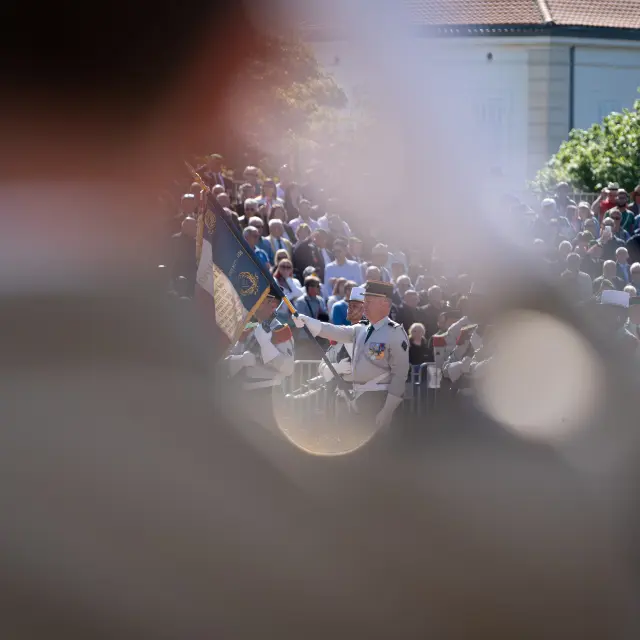
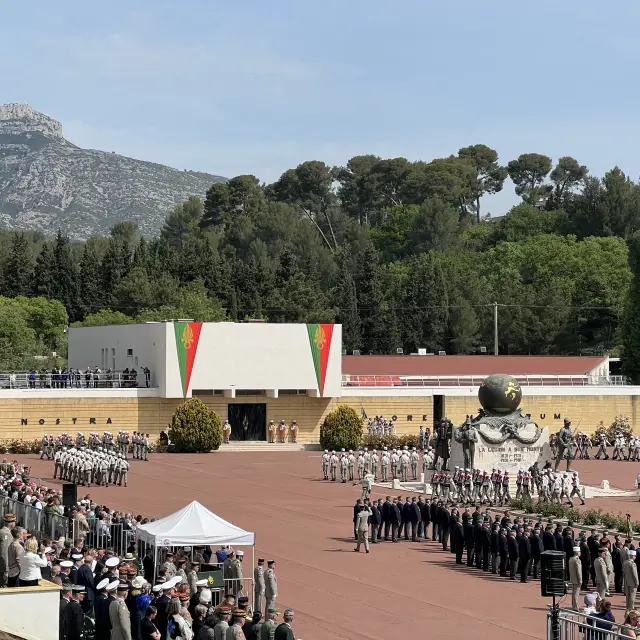
In Aubagne, at the Viénot quarter – the headquarters of the French Foreign Legion – Camerone is celebrated with great solemnity every year. This ceremony is one of the most important moments in legionary life.

The day of 30 April begins with the taking up of arms , during which the Camerone ceremony takes on special importance. This is followed by the official reading of the story of the Battle of Camerone. This text, handed down from generation to generation, recalls the events and values of the legionnaires.

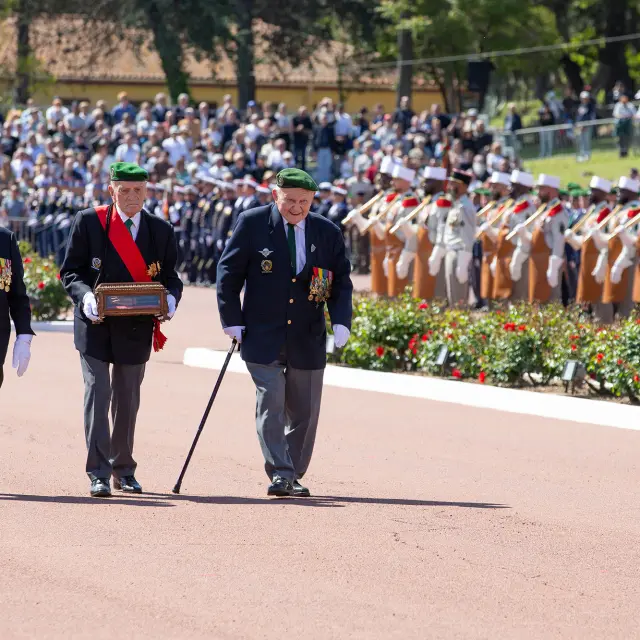
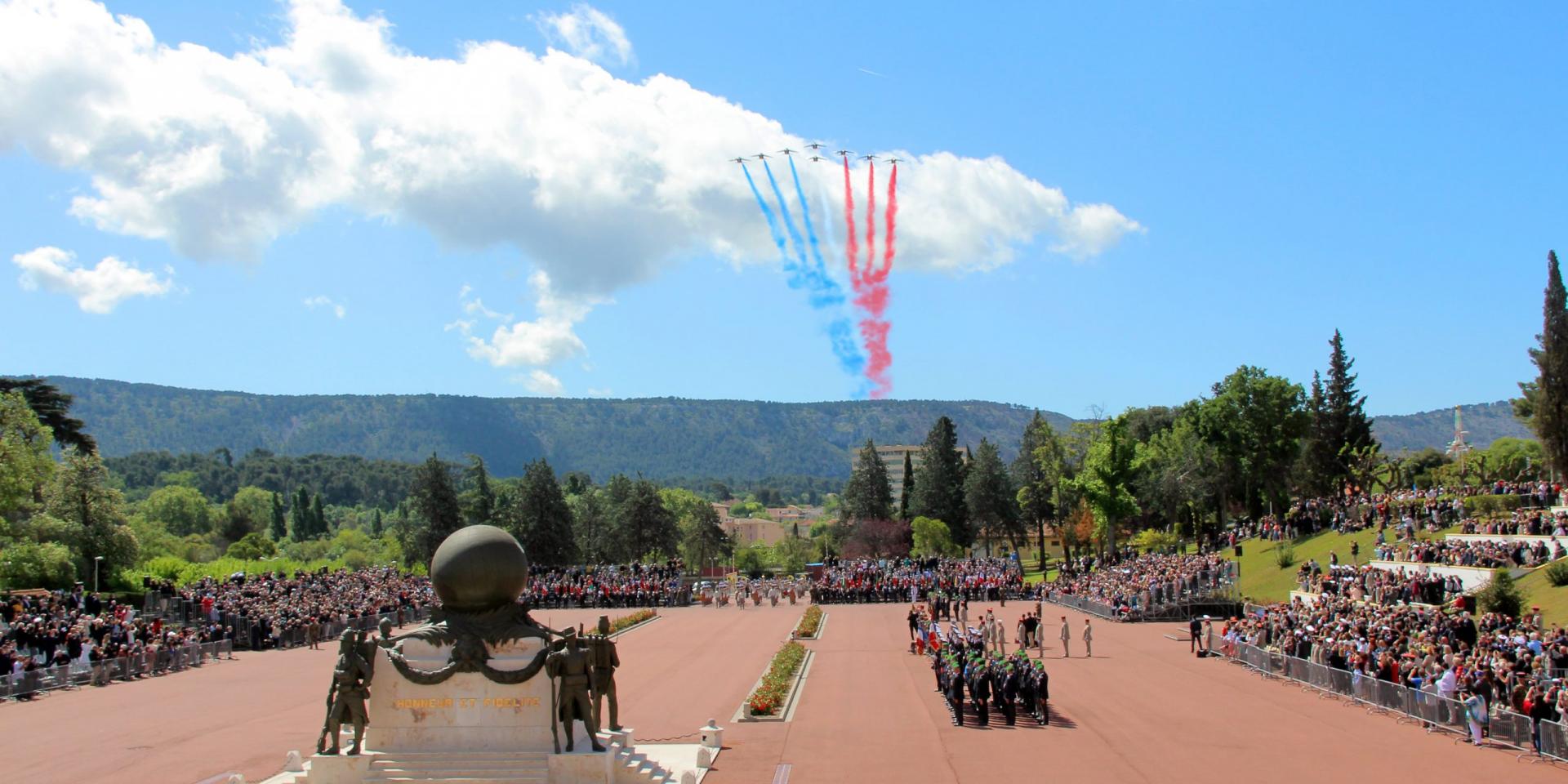
One of the most memorable moments is the presentation of Captain Danjou’s hand, an emblematic relic preserved by the Legion. This powerful symbol is at the heart of the ceremony and always arouses great emotion. A veteran, designated by the General Commandant of the Foreign Legion, walks down the Voie Sacrée, facing the Monuments aux Morts, and presents this relic to the troops in arms. This presentation marks the symbolic renewal of the oath to serve the Foreign Legion “honestly and faithfully”.

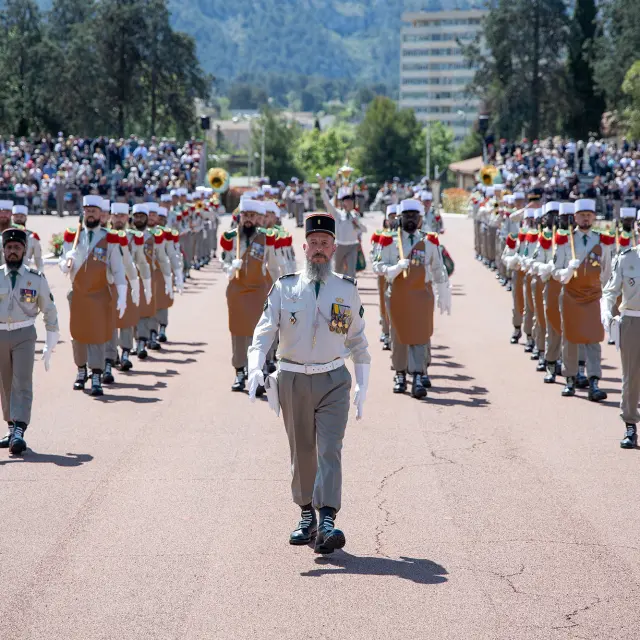
A military parade, often preceded by a visit from the Patrouille de France, concludes this magnificent presentation of arms.

Attend the Camerone ceremony

The Camerone ceremony is open to the public free of charge, subject to prior registration (place is by name only), and attracts more than 10,000 visitors every year. For two days, it’s a rare opportunity to discover the traditions of the Foreign Legion and to experience a moment steeped in history.

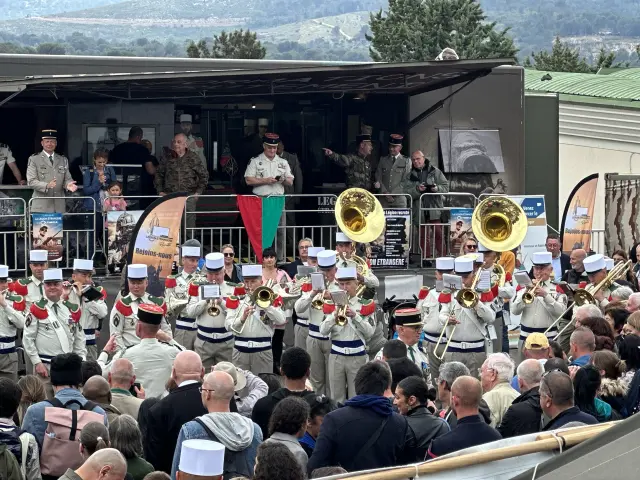
The official ceremony is accompanied by a wide range of events for young and old alike: Aubades by the Légion Étrangère Band, the election of Miss Képi Blanc, a fair (on both days) and a host of food stalls. The atmosphere is both solemn and festive.

Other highlights, such as the legionnaire’s ball, are not open to the public and are reserved for legionnaires.

Camerone is very well attended, and it is advisable to arrive early to take full advantage of the event. Camerone offers a unique opportunity to immerse yourself in the world of the French Foreign Legion, at the very heart of its base in Aubagne.

Theme for the 2026 edition

Each year, the Legion chooses a particular theme to illustrate the year. The theme for this year, 2026, is “The Nobility of Service “. The Foreign Legion has chosen to pay tribute to the unique and fascinating history that links it to the nobility: that of the kings, emperors and princes who have counted among its ranks or supported it since its creation in 1831 by King Louis-Philippe I. This theme evokes the illustrious legionnaires of royal, imperial or princely origin who chose to serve under the white kepi, embodying the universality and prestige of an institution that is unique in the world. The Princes of Monaco, Orléans and Napoleon, as well as representatives of the King of Denmark, will honour the Legion with their presence.

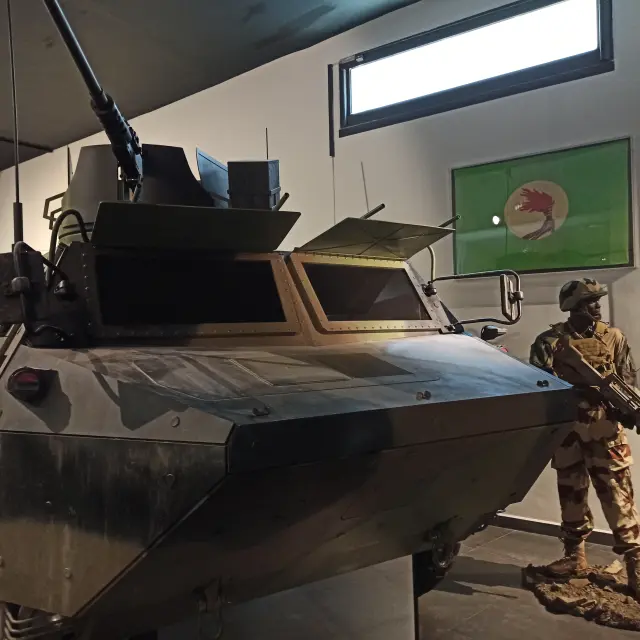
As a result, the Legion Museum is putting on a temporary exhibition on the same theme, featuring some very rare items from these prestigious families.

Captain Jean Danjou

The central figure of Camerone, Captain Jean Danjou has become one of the strongest symbols of the Foreign Legion.

An experienced officer in the Second Empire, he took part in several campaigns before being sent to Mexico. On 30 April 1863, he took command of the 3rd Cie of the 1st Foreign Regiment, responsible for the escort mission. This company was made up of personnel who had not been hit by the “vomito negro”, the terrible yellow fever that destroyed a large proportion of French units at the time. A mix of old and young legionnaires, some even dedicated to support duties.

As well as his famous wooden hand, which became the emblem of the Camerone sacrifice, Captain Danjou distinguished himself by an exemplary career in the service of the Legion. While this prosthesis bears witness to an injury received in the line of duty, it symbolises above all the determination of an officer who devoted his entire life to duty.

His courage and leadership during the battle made him a legendary figure, fully embodying the spirit of the Foreign Legion.

The hand of Captain Danjou

a symbol to discover in Aubagne

Captain Danjou’s famous wooden hand is now preserved in the crypt of the Foreign Legion Museum in Aubagne. The museum can be visited free of charge all year round, with guided tours sometimes available to the public. However, this exceptional relic is only displayed outside the museum on one occasion: during the Camerone ceremony on 30 April, when it is solemnly carried before legionnaires and visitors.

FAQ - Camerone Foreign Legion
  • Where does the Camerone ceremony take place?

    The ceremony takes place every year in Aubagne, at the Viénot district, headquarters of the French Foreign Legion. It is open to the public and attracts many visitors every year.

  • When does the Camerone ceremony take place?

    The ceremony takes place over 2 days: 30 April and 1 May.

  • How do I register for the Camerone ceremony?

    All you have to do is register here to receive a personal invitation. Registration is completely free of charge.

  • Can we eat there?

    Numerous food stalls will be on hand to provide visitors with lunch and refreshments throughout the day.

  • How do I get to the ceremony?

    Shuttle buses provide a continuous round-trip service between Aubagne station and the Regiment site, as well as from the ZI les Paluds and the Campagne Roux car park. Find out more here.
    As the site is currently undergoing works, you are advised not to drive to the site, as space is very limited.

    There will also be restrictions on traffic and parking : the route de la Légion will be closed to traffic and parking from 6am to 3pm (between avenue Manouchian and chemin de Thuilière). Traffic around the Viénot district may be severely disrupted in the morning (between 7am and 10.30am).

    To facilitate your arrival, it is advisable to exit at La Penne-sur-Huveaune if you are coming from Marseille, or at Les Paluds if you are coming from Aix-en-Provence or Toulon.

    PRM parking : requests must be made when you register online. Proof of disability will be required at the entrance to the Regiment to gain access to the parking space.

Discover also

Foreign Legion in Aubagne